
Travel Tips
Self-Guided Cycling in Vietnam: What to Expect and How to Do It Well
Written by
Manager
Publish on
3 tháng 3, 2026
Table of contents


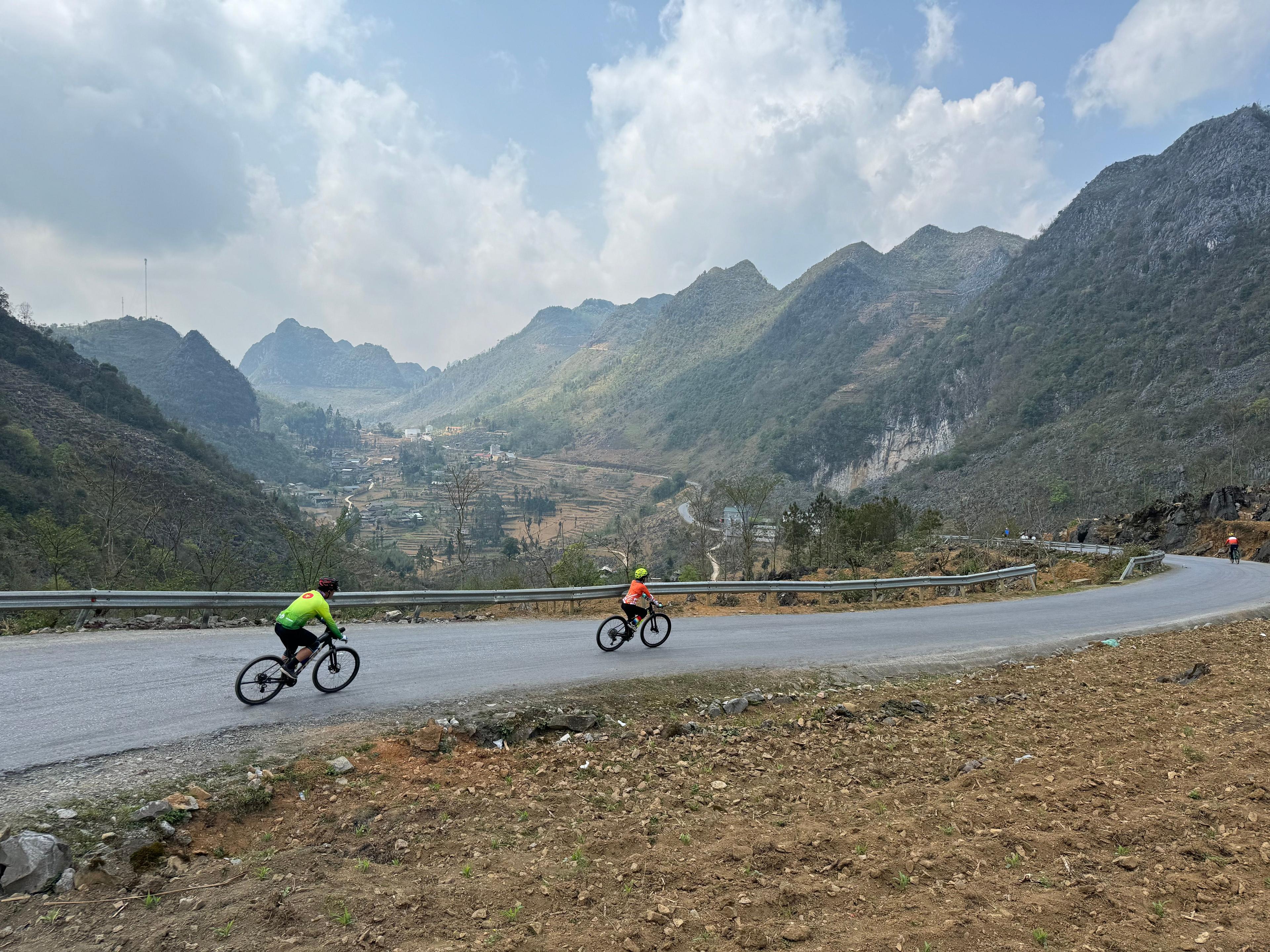
Table of contents
For cyclist looking to explore Southeast Asia beyond the usual tourist routes, Vietnam deserves a spot high on your bucket list. On two wheels, the country reveals itself slowly: morning markets coming to life, farmers working the fields, quiet coastal roads, and mountain villages far removed from the main highways. It’s a place where cycling doesn’t just move you through landscapes - it pulls you into everyday life.
If you’re already thinking about a self-guided cycling tour in Vietnam, chances are you don’t need an explanation of what “self-guided” means. You’re past the basics. What you really want to know is what it’s actually like to ride here, how to plan smartly, and what can make or break a solo journey.
That’s exactly what this guide focuses on. Instead of generic tips, we’ll share real-world insights into Vietnam’s terrain, weather, logistics, and riding culture, along with practical advice to help you design a trip that’s challenging, enjoyable, and realistic whether it’s your first solo cycling adventure in Asia or your next big ride.
Vietnam’s Terrain and Weather: What to Expect Region by Region
Vietnam stretches over 1,600 kilometers from north to south, and its geography changes dramatically along the way. Mountains give way to coastal plains, highland plateaus transition into river deltas, and weather patterns shift just as quickly. For cyclists, this means one important thing: where and when you ride matters just as much as how strong you are.
Before choosing routes or daily distances, it’s worth understanding how weather and terrain interact because in Vietnam, they often define the difficulty of a ride more than elevation profiles alone.
1. Weather Realities Cyclists Should Know
Cycling in Vietnam isn’t about riding in cold conditions. Instead, the real challenge is heat, humidity, and timing. High humidity limits how effectively your body cools itself, which means long efforts can feel significantly harder than expected - even on flat roads. Riders who underestimate this often find themselves fatigued earlier in the day than planned.
Wind is a separate and often underestimated factor, especially in open and coastal regions. In places like Binh Thuan and the South Central Coast, strong headwinds paired with high temperatures can quickly drain energy and slow progress. Ride the same route with a tailwind, and suddenly long distances feel far more manageable. Choosing the right riding direction can be just as important as choosing the route itself.
Weather also varies clearly by region. Northern Vietnam experiences more defined seasons, with cooler winters and misty mountain conditions at higher elevations. Central Vietnam is shaped by coastal winds and seasonal storms, while southern Vietnam stays warm year-round, with afternoon heat and humidity influencing the ideal riding hours. Seasonal rains are usually short but intense, affecting visibility and road grip when they hit.
Knowing when to ride, which direction to ride, and how terrain interacts with weather often matters more than raw fitness. Plan your route carefully, follow regional forecasts, and prepare for realistic daily distances with enough flexibility to adjust when conditions change.
2. Regional terrain
Vietnam’s terrain changes dramatically from one region to the next. Understanding these differences helps you choose routes that match your experience level, riding style, and expectations.
Northern Vietnam — Mountains and Highlands
Terrain profile:
- Dominated by mountains and highlands (Hoang Lien Son, Fansipan peak) in the northwest.
- Hills, deep valleys, and rugged terrain near the Laos/China border.
- Includes the Red River Delta - flat but brief compared to the uplands.
Cylist notes:
- Expect long climbs, steep descents, and variable road surfaces.
- Terrain shifts quickly over short distances.
Best for experienced cyclists comfortable with elevation and unpredictable conditions.
Central Vietnam — Coastal Hills and Passes
Terrain profile:
- A narrow band between the Annamite (Truong Son) Mountains and the South China Sea.
- Many coastal passes and rolling hills between beachside flatland and inland slopes.
- Includes North Central Coast and South Central Coast regions.
Cylist notes:
- Terrain alternates between gentle hills and coastal plains.
- Not as mountainous as the north, but still mixed and varied.
- Coastal wind and humidity can influence effort more than gradient.
Southern Vietnam — Flat Mekong Delta and Lowlands
Terrain profile:
- Dominated by the Mekong Delta: almost entirely flat, low-lying region close to sea level.
- Very gentle landscapes with rivers, canals, and agricultural land.
- Coastline extends along the East Sea and into the Gulf of Thailand.
Cylist notes:
- No real climbs - but heat, humidity, and wind become the main challenges.
- Easy navigation and frequent towns, food stops, and accommodation make planning simpler for lone riders.
Where Solo Cyclists Commonly Ride in Vietnam — Based on Experience Level
Vietnam doesn’t offer a single “best” cycling route for solo travelers. Instead, riders naturally gravitate toward different regions depending on their experience, comfort level, and what they want to get out of the journey. Some prioritize ease and flexibility, while others seek challenge, solitude, and dramatic landscapes. Understanding these patterns helps you choose routes that fit your riding style not just your fitness.
Routes First-Time Solo Cyclists Often Choose
Most first-time solo cyclists in Vietnam gravitate toward places where daily distances stay flexible, navigation is intuitive, and the ride feels manageable.
Southern Vietnam fits this profile well. If a day feels tougher than expected, it’s usually easy to shorten the ride or stop early without being isolated between towns.
Logistics are another major advantage. Food and accommodation are plentiful. Many roads follow canals, rivers, farmland, or quiet coastal routes instead of major highways, keeping the ride calmer and more predictable - a key confidence booster for solo cyclists.
Culturally, these regions still offer rich, everyday experiences. You ride through working villages, local markets, ferry crossings, and coastal communities where daily life unfolds right along the road. The riding stays simple, but the journey remains deeply engaging.
Ideal regions:
- Mekong Delta: flat terrain, dense waterways, village roads, frequent food stops, and strong cultural immersion
- The Southern Coast: areas like Long Hai, Vung Tau, Mui Ne, Phan Thiet, Ke Ga - scenic seaside roads with reliable infrastructure and easy logistics
Routes Experienced Riders Gravitate Toward
With experience comes curiosity and many cyclists eventually look north or toward the central spine of Vietnam for routes that demand more attention and reward it with depth.
These regions introduce long mountain climbs, sustained descents, and narrow roads through valleys and highlands define much of the riding. Distances between towns can be longer, services less predictable, and road surfaces more variable - all part of the appeal for cyclists who enjoy problem-solving on the move.
Tourism has a lighter footprint here. You’ll spend long stretches cycling through remote villages, forested hills, limestone landscapes, and highland farming communities. The reward is a stronger sense of solitude and immersion, but it comes with trade-offs: fewer accommodation options, limited food windows, and a greater need for planning and flexibility.
These routes are best suited for cylists who are comfortable navigating independently, riding confidently in mixed traffic, and adapting when conditions shift - whether that means weather delays, roadwork, or changing a day’s plan entirely. For those riders, the experience can be exceptionally rewarding.
Ideal regions:
- Northern Vietnam:
- Ha Giang Loop: dramatic mountain scenery and sustained climbing
- Hanoi – Sapa: long ascents through highland terrain
- Mai Chau – Pu Luong: rolling valleys, rural roads, and steep passes
- Ninh Binh: limestone karsts, backroads, and quiet countryside riding
- Central Vietnam:
- Hai Van Pass (Hue – Hoi An): coastal climbing with sweeping views
- Da Lat – Nha Trang: highland descents from cool forests to the coast
- Phong Nha – Ke Bang Loop: remote roads through karst landscapes and national park terrain
Luggage & Logistics: The Art of Traveling Light
One of the quiet advantages of cycling in Vietnam is how easy it is to separate riding from luggage. Many solo cyclists choose to ship bags ahead rather than carry everything on the bike - and this often makes the difference between a comfortable, sustainable ride and an exhausting one.
Vietnam has a dense and reliable domestic logistics network, making luggage shipping both affordable and straightforward. For cyclists, this means you can ride light while your non-essential gear moves ahead independently.
Reliable luggage shipping services:
- Viettel Post: widely used, dependable, fast, and easy to find (most recommended)
- 247Express: quick service between major cities
- Vietnam Post (VNPost): nationwide coverage and good access to rural areas, though slightly slower but reliable. For faster delivery, you can try their EMS (Express Mail Service) option.
Shipping typically costs around USD $10–15, depending on distance and size. Delivery between major cities usually takes 1–3 days, and up to 4 days for longer routes.
Practical tips:
- Ship bags one day ahead of your riding schedule
- Always keep essentials with you: cycling kit, tools, chargers, and documents
- Confirm in advance that your hotel accepts deliveries - most do
- If possible, ask the hotel to notify you once your luggage arrives
- Avoid “holding” luggage at post offices. Always ship directly to a hotel where a staff member can receive it and confirm arrival with a quick phone call.
Physical & Recovery Preparation (Beyond Training Miles)
Physical fitness is only half the equation. Preparing for a self-guided cycling tour in Vietnam also means preparing your body for the environment.
1. Heat acclimatization matters
If you’re arriving from a cooler climate, avoid planning an ambitious first day. Vietnam’s “wet heat” takes time to adjust to, and most riders need 3–5 days for their body to adapt. During this period, shorter distances and conservative pacing go a long way.
2. The 11:00 AM rule
In warmer months, the sun becomes a real physical load by late morning. A common rhythm among experienced cyclists is to start riding around 6:00 AM, make solid progress early, and aim to stop by 11:00 AM. A long lunch break, sometimes paired with a short rest often matters more for recovery than pushing through the heat.
3. Hydration is more than drinking water
High humidity accelerates salt loss, which is why drinking plain water alone is not enough and often leads to fatigue. Carry electrolyte tablets when possible, and take advantage of local options like Nước Mía (sugarcane juice) for quick energy and glucose. Staying ahead of dehydration helps prevent the heavy-leg feeling that can end a day early.
4. Sleep is a recovery tool, not a luxury
Consistent, quality sleep allows your body to recover faster between riding days. Prioritizing rest often has a bigger impact on performance than squeezing in extra kilometers.
5. Prepare your body before Day One
Before starting your main journey, many cyclists benefit from a few short conditioning rides of 20–30 km to loosen the body. Daily stretching, especially for hips, calves, hamstrings, and lower back helps prevent stiffness from building over consecutive days.
What Matters More Than Fitness or Distance
On a self-guided cycling tour in Vietnam, success isn’t defined by how far you ride or how strong your legs are. More often, it comes down to how well you read situations, manage uncertainty, and respond to what the road gives you each day.
1. Traffic Confidence and Road Awareness
Vietnam’s traffic looks chaotic at first, but it runs on its own logic. Most riders aren’t aggressive - they’re reactive. The key skill isn’t speed, but predictability.
Cyclists who ride confidently, hold a steady line, and signal intentions clearly tend to be given space. Hesitation, sudden stops, or erratic movements cause more problems than traffic density itself.
2. Navigation Skills and Reading the Road
Good navigation in Vietnam goes beyond following a GPX line. Detours, roadworks, ferry crossings, and changing surfaces are common, especially outside major cities.
Offline maps are essential. Upload your route to your head unit or phone before riding, but stay alert to real-world conditions. Sometimes the best decision is ignoring the “official” route and following a quieter local road instead.
Traffic signals exist, but many interactions rely on eye contact and flow rather than strict rules. Learning to read vehicles, anticipate movements, and adjust smoothly is far more useful than memorizing regulations.
3. Basic Bike Mechanics and Problem-Solving
You don’t need to be a mechanic, but you should be comfortable handling basics:
- Fixing a flat
- Adjusting brakes or gears
- Diagnosing simple issues before they become bigger ones
Bike shops are common in cities and towns, but less so in remote areas. Knowing what you can fix yourself and when to seek help - saves time and energy.
4. Safety Habits That Actually Help
Solo cycling doesn’t mean cycling unseen. Simple habits add a strong layer of safety:
- Tell someone your planned route and expected arrival each day
- Share live tracking or upload your route to Strava or your head unit in advance
Carry a local SIM card for calls and data.
Tip: For the most stable and reachable connection in rural areas, get a Viettel SIM. Buy it right at the airport; it's reliable, convenient, and saves hunting for a shop later.
In case of issues, having basic contacts ready matters more than having perfect coverage:
- Local emergency number: 113 (police), 115 (medical)
- Your accommodation contact
- A local support or tour operator if you’re using self-guided services
5. Knowing When Support Makes Sense
Self-guided doesn’t mean unsupported. Many riders underestimate how helpful it is to have backup - someone who understands cycling, local logistics, and regional conditions.
Support becomes especially valuable when:
- Riding in remote areas
- Dealing with weather disruptions
- Managing luggage logistics or route changes
Knowing when to ask for help isn’t a weakness — it’s good judgment.
What an Ideal Self-Guided Cycling Tour Looks Like
A truly good self-guided cycling tour doesn’t feel complicated once you’re on the road. It feels natural. The route makes sense, the days flow, and your focus stays where it should - on the ride itself, not on solving problems as they come up. And that kind of experience isn’t accidental. It comes from thoughtful planning, local knowledge, and a realistic understanding of how cycling actually works here.
1. Routes Built for Real Riding Conditions
An ideal self-guided cycling route is designed for what happens on the ground, not just what looks good on a map.
Terrain, weather, traffic patterns, distance, and elevation all shape how a day feels in the saddle. Good routes respect that. They allow flexibility - longer days when you feel strong, shorter ones when the heat or scenery calls for an easier pace.
Balanced route design turns challenging regions into rewarding rides and keeps easier terrain from feeling repetitive.
2. Local Knowledge That Actually Matters
On a self-guided cycling tour in Vietnam, local knowledge shows up in small, practical ways that shape the day.
Cyclist-specific advice means knowing where food reliably appears, when rest stops make sense, and how often water is available - especially in hot or remote sections. A well-timed lunch or coffee stop can matter more than shaving a few kilometers off the route.
It also means knowing which local sights are worth slowing down for. Quiet villages, ferry crossings, countryside temples, coastal viewpoints - places that sit just off the main road and reward riders who take the time to stop.
The best self-guided tours share only what’s useful, right when it’s needed.
3. Logistics That Stay Out of Your Way
Good logistics are the ones you barely notice while riding.
Accommodations are chosen to work for cyclists - easy to roll into after a long day, close to food, and quiet enough for real recovery. No extra detours just to find dinner. No places that look fine online but feel impractical on arrival.
Luggage can be moved ahead so you ride light and keep the bike handling the way it should. Your energy stays in the pedals, not in carrying gear.
4. Independence, With Backup When It Counts
Self-guided doesn’t mean unsupported.
The ideal setup gives you full independence on the bike, paired with quiet reassurance in the background. If plans change, weather shifts, or something unexpected comes up, you know exactly who to contact and how to get help.
Most days, you won’t need it. But knowing it’s there lets you ride further, explore more freely, and enjoy the journey.
At Cào Cào Adventures, this is how we design self-guided cycling tours. Our routes are built from years of riding these roads ourselves - shaped by real conditions, local knowledge, and an understanding of what makes long days in the saddle feel right.
If you’re looking to experience Vietnam by bike with independence, confidence, and depth, this is how we recommend doing it.
➡️ Explore our self-guided cycling tours in Vietnam: https://caocaoadventures.com/en-self-guieded-tour-new
Written by
Manager
Share this post