
Vietnamese history - A comprehensive guide
Written by
Manager
Publish on
30 tháng 11, 2025
Table of contents


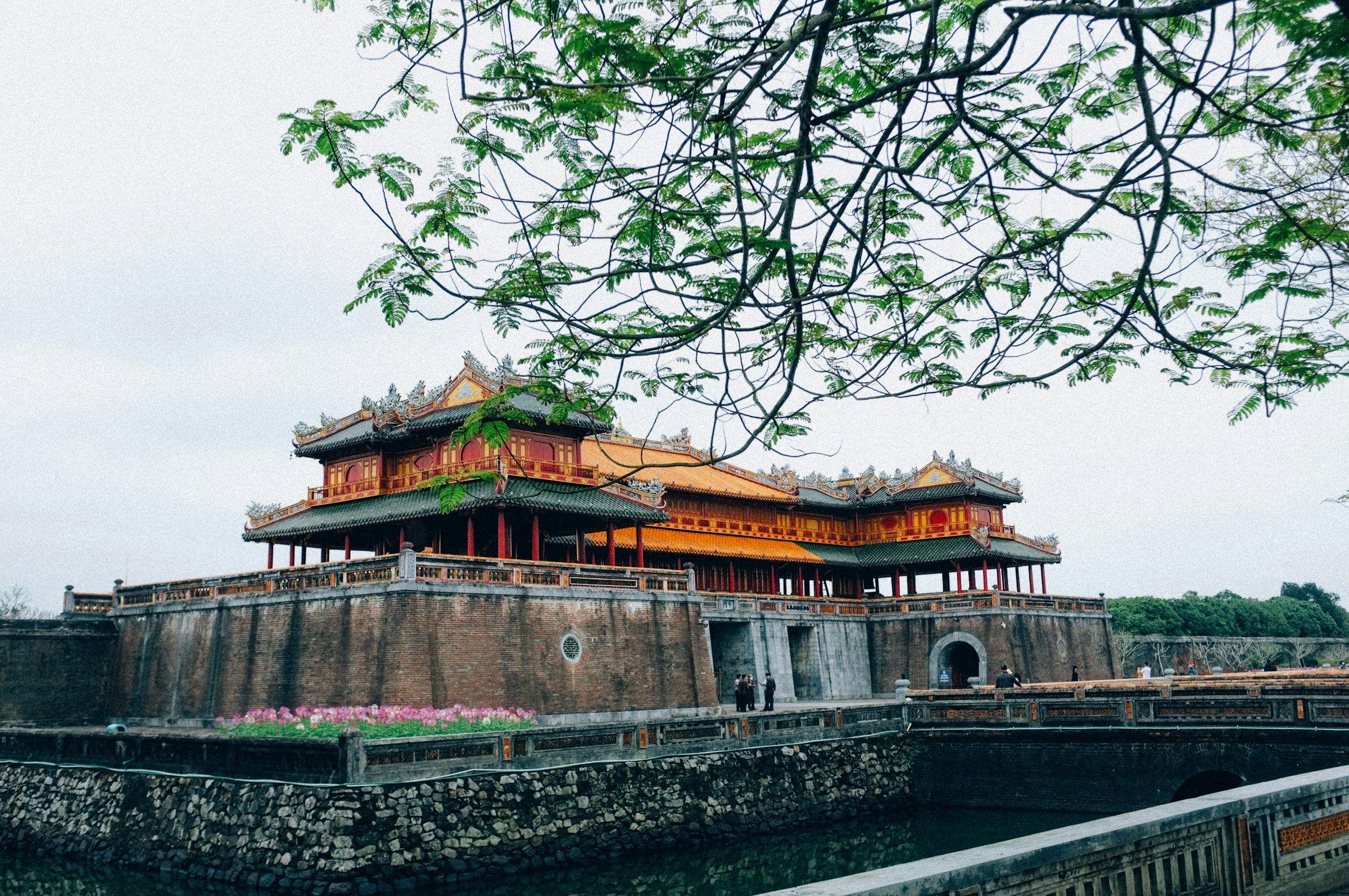
Vietnam is a country with a history stretching over 4000 years. Over this long period, it has formed dynasties, attacked by many types of aggressors, being cut off from the world, then rejoined with it. In this country, flows of ideas, cultures and ideologies flow in, some retained, some reformed or rejected.
Geographically, Vietnam is at the center of great struggles. Located along the South China Sea, it borders China to the north, close to important trade routes, and at the junction of civilizations. It absorbs Chinese cultural influences for 1000 years, then resists Mongolian invasions, colonized by the French, attacked by Japanese, then later by the American as a proxy war in the great Cold War of 20th century.
In the 20th century, communism gave Vietnam a unifying ideology that blends with patriotism. During this time, Vietnamese fought French colonial forces, then American-backed South Vietnam, then unified North and South in 1975. During that time, the country became a symbol of anti-imperial resistance that was watched closely by both Washington and Moscow, Beijing and Havana.
After the war, Vietnam faced isolation and economic hardship. In 1986, Đổi Mới (Economic Reform) helped Vietnam integrate to the world’s flow of trade, combining socialism with market policies. This change in economic policies transformed Vietnam in the global landscape - from a war torn country to a dynamic economy, who trades with near and far partners.
Nowadays, traces of different layers and periods of Vietnam history can be seen in various places: temples, museums, war memorials. Vietnam's history is a story of survival, of the journey to find its space among great powers, a way to appreciate tradition and progress.
Let’s look at this complex, fascinating journey via different periods:
DYNASTY RULES (2nd to 15th centuries)
Between the times of independence and Chinese occupation, some dynasties stand out in Vietnamese history: Lý, Trần, Lê
The Lý Dynasty (1009–1225)
The Lý Dynasty (1009–1225) begins when a king named Lý Công Uẩn took the throne and move Vietnam’s capital to Thăng Long (today’s Hanoi). This moment marks the ending of years of instability, opening a new era of order.
Essentially, this era was shaped by the spirit of Buddhism, which is integrated in both political and civic life. During this period, the country was in a state of peace, harmony, independence, helping to form a unique Vietnamese identity after centuries being dominated by Chinese.
During the governance, Ly kings built a strong centralized government, expanded farming in Red River Delta, and also boosted trade via systems of canals and roads. They also oversaw the construction of various temples and pagodas, which turned Thang Long into a political and cultural center.
In the end, corruption and struggles weakened the justice system in the centralized government, while local governance grew stronger. In 1225, the Tran family took over the Ly Dynasty, yet this period still built an enduring foundation for Vietnamese culture and history.
The Trần Dynasty (1225–1400)
The Trần Dynasty (1225–1400) began when Trần Cảnh married the last queen of the Ly dynasty. During this time, the capital is still in Hanoi. This is a smooth power transfer, and when a new ruling family starts.
The Tran dynasty was marked by military strength and resilience. During this period, qualities like loyalty, discipline, and unity were encouraged and emphasized, with many brave generals. During this time, the dynasty fought against the Mongol invasions in the 13th century, led by general Trần Hưng Đạo. Aside from warfare, the Tran rulers fostered the growth of agriculture, boosted education via Confucian exams, supported literature and Buddhism, and therefore allowed Vietnamese culture to flourish.
However, later rulers grew negligent and corruption seeped into the court system. As central governance became weaker, the dynasty struggled to govern the provinces. In 1400, Hồ Quý Ly seized power, bringing the Trần era to a close. Nevertheless, this dynasty is remembered for uniting people in defences of homeland, and for strengthening Vietnam’s cultural identity.
The Later Lê Dynasty (1428–1789)
The Later Lê Dynasty (1428–1789) began after the hero Lê Lợi led Lam Sơn uprising and pushed Ming armies of China out of Vietnam. With his victory, there was a new dynasty, and Vietnamese independence was restored.
The Lê Dynasty was marked by Confucian values that revolve around order, hierarchy, and scholarship. During this period, morality and learning were emphasized, and meritocracy flourished.
During this period, Le dynasty expanded the civil service exam, made the central authority stronger, and advanced southward, gradually extending Vietnam’s territory. During this time, the dynasty had a golden age of law, education, and culture. The famous Hồng Đức Code and rich literary achievements were formed and retained.
Over time, emperors gradually lost power, and powerful families took control. Later, the Trịnh and Nguyễn lords divided the country into rival regions. Internal conflict weakened the dynasty and its rule ended when the Tây Sơn uprising happened. Despite that, the Later Lê dynasty left a strong imprint on Vietnam’s governance, scholarship, and Vietnam’s map.
SOUTHWARD EXPANSION (15th to 17th centuries)
Between the 15th and 17th centuries, Vietnam expanded southward. In this period, the country is strong and there is a need for it to expand somewhere, but it could not expand to the north - where there is China, a too strong power. The South became a strategic choice - offering fertile land, abundant population, and the sea with ports allowing it to connect with the wider world. This process was done by many dynasties, of which, the main one is in the Ly Dynasty, when they took over Bố Chánh, Địa Lý, and Ma Linh from Champa, extending their territory to Quang Tri.
Various tactics of various dynasties were used to deepen southward expansion. The Trần Dynasty did it by marriage alliance with the Cham king. The Hồ Dynasty The Hồ Dynasty expanded southward mainly through military campaigns and political maneuvering. In the later Lê dynasty, Vietnam launched major campaigns to reclaim many prefectures, expand the country to Bình Định, and divide Champa into many regions so that it can be more easily governed and integrated.
During the division of Trịnh–Nguyễn, southward expansion intensified, Champa was fully incorporated, Vietnam extended the territory into parts of Cambodia, and consolidated control over new areas by setting up administrative posts and resettlements of Vietnamese.
Altogether, by combining military conquest, political marriage, administrative control, and population migration, Vietnam laid the foundation to strengthen its power, establish enduring diplomatic relations with neighboring countries. In terms of territory, this period helped the country expand the territory from Quang Tri to Bình Định, fully absorb Champa, and create the ground for long term growth of the whole country, and integration of new regions.
THE LAST DYNASTY (19th century)
In the 19th century, Vietnam started its Nguyen dynasty, ending centuries of civil strife and fragmentation. During this period, the country united under the rule of emperor Gia Long. The king established a centralized administration, infused Confucian institutions, and formed stability after a long time of turbulence. In this time, there are careful efforts to unify power, put laws into code, and construct a sense of national identity via rituals, governance, and education.
At the peak of its growth, the power of the dynasty was expanded, its bureaucratic structures were strengthened, peace was maintained, trading and culture flourished. However, as time passed, some challenges were revealed. The institution became rigid, and the policies of the court were too conservative to adapt to an increasingly changing, complex society. During this time, external pressures became prominent.
As corruption and inefficiency made the local administration weak, European powers brought a new threat to their sovereignty. In the end of the 19th century, the Nguyễn Dynasty’s inability to adapt to the new environment left Vietnam vulnerable to the aggression of the colonial powers, signifying the end of an era of unity and stability.
FRENCH COLONIZATION (late 19th to early 20th century)
The middle of the 19th century was the turning point in Vietnamese history when the French started to colonize the country, marked by the invasion of southern Vietnam in 1858. In 1859, Saigon was taken. The colonization was deep and systemic, when France had the ambition and indeed imposed structural changes in Vietnam. The French, step by step, dismantled traditional authority, minimizing the power of the remaining Nguyễn court and local mandarins, and at the same time establishing their own administrative structures.
The French started to bring Western-style governance, legal codes, and new economic policies into the country. Exploitation happened. Cash crops such as rice, rubber, and opium were forced to be exported at the expense of local subsistence farming. There were some positive relics from the interactions, however, the French also brought modern infrastructure such as railways, telegraph lines, ports, and bridges, Western education, medical practice.
At the peak of the colonial rule, the French consistently implemented military campaigns, hence expanded their territories, consolidated Indochina, dividing Vietnam into separate administrative zones: Cochinchina (the south, with Saigon), Annam (the central region, with Huế as the Nguyễn capital), Tonkin (the northern region, including Hanoi). Trading with Europe was facilitated, culture exchange was promoted, but in ways that boost the interests of the colonial government than local development.
Gradually, dissent grew in the local community. Vietnamese intellectuals, scholars, and peasants formed waves of resistance movements. It took many forms: there were armed uprisings such as Cần Vương movement and Hoàng Hoa Thám’s guerrilla war, there were also reformist efforts by progressive thinkers such as Phan Bội Châu and Phan Châu Trinh, who explored other countries to seek a way to change via modernization and education. There was resistance via quốc ngữ literature. Small resistance in villages grew bigger, and eventually turned into more organized nationalist movements in the early 20th century.
Over time, there were more negative impacts of French colonization. The burden of high taxation, forced labor, land confiscations, and harsh punishments instilled deep social unrest. The French used policies to assimilate culture and promote French culture and language at the expense of local customs. This erodes traditional identity, while economic exploitation led to deep inequalities between urban elites and rural peasants.
Meanwhile, exposure to Western ideas of science and modernity made the intellectuals stronger, and therefore helped them in future resistance. By the 20th century, various resistance movements grew stronger across the nation - both reformist and revolutionary. This marks the start of decades of struggle. After WWII, French colonial rule began to decline as anti-colonial movements became stronger across the world, and Vietnamese resistance became more organized under Viet Minh. The First Indochina War (1946–1954) made the French weaker, gradually leading to their final defeat in the battle of Điện Biên Phủ in 1954. In that same year, the Geneva Accords forced France to get out of Vietnam, officially ending nearly a century of French colonial domination in Vietnam.
INVASION TO INDEPENDENCE (early to mid 20th century)
After the Điện Biên Phủ battle in May 1954, the Geneva Accords were signed. The French were forced to withdraw from Vietnam, officially ending nearly a century of colonial rule. However, during this time, the country was divided at the 17th parallel. The internal resistance and the inflows of different ways of seeing made Vietnam have two types of government - Hồ Chí Minh’s Democratic Republic of Vietnam in the North and the Republic of Vietnam, supported by the United States, in the South.
Though Vietnam gained independence, the country was deeply divided. In the north, the government implemented land reforms and built a socialist state. In the South, an American-back government, led by Ngo Dinh Diem, consolidated power and built a new state. Two drastically different forms of governments leave their traces in the citizens’ ordinary lives - with people in the North doing collective farming and following revolutionary programs, and people in the South following a capitalist model.
In 1956, the national election promised in the Geneva Accords to unify the country failed to materialize. North and South Vietnam, driven by conflicting values, deepened their mistrust and division. In the late 1950s, the communist insurgents in the South, later organized into the National Liberation Front (NLF), started to attack the government of Ngo Dinh Diem. Meanwhile, as a side-effect of the Cold War, the US increased its involvement in Vietnam.
INVASION TO INDEPENDENCE (early to mid 20th century)
In the early 1960s, the United States increased its involvement in Vietnam. The involvement started with arms, financial and advisor support to help the Southern government, then started to send combat troops. By the late 1960s, more than half a million US soldiers were in Vietnam. The war escalated, became more costly, turned into one of the biggest Cold War conflicts, and a lot of bombs were dropped in Northern Vietnam as well as on fierce battles in Southern Vietnam.
The war is a struggle between US-backed southern Vietnam, and the North that is backed by the Soviet Union and China. The Vietnamese used guerilla warfare while the US used much more powerful weapons and air power. During this time, cities were destroyed, farmland bombed, and millions of civilians were displaced. Gradually, the war attracts more voices of opposition coming from across the world and US itself.
In 1968, North Vietnamese and Vietcong armies organized coordinated attacks on more than 100 cities across Southern Vietnam, attacking Saigon, Huế, U.S. Embassy compound. The attack became a surprise and decreased US confidence in the war, by revealing the weakness of US and South Vietnamese forces. Public opinions in the US, after the event, turned to arms de-escalation, and eventually, withdrawal. In 1973, the Paris Peace Accords of 1973 ended US military involvement in Vietnam, US troops withdrew, and prisoners of war were released. However, North and Southern Vietnam were still in conflict. On April 30, 1975, Northern Vietnamese forces launched a final offensive, leading to the fall of Saigon, ending the war, and the country was united under communist leadership.
DOI MOI & VIETNAM NOW (late 20th century to the present)
Years after the country was united, Vietnam had many challenges as it struggled to rebuild the country. The central planning economic policy weakened the economy as it had shortages and was isolated from the global community. The crisis culminated until the mid 1980s, when reforms had to be done to bring Vietnam out of the crisis.
In 1980, a key change in economic policy happened - Đổi Mới (Renovation), a set of reforms happened. Vietnam became open to the market economy, while the party still controlled things politically. Under the impact of such policies, private entities flourished, foreign investment flowed in, and trade happened more quickly. Over time, Vietnam transformed from one of the poorest countries in the world into a dynamic emerging economy.
Along with the reform, drastic changes happened in the society when it is more urbanized and modernized. Vietnam started to integrate more deeply and comprehensively into the regional blocs and world organizations. In 1995, Vietnam normalized relations with the United States. In 2007, it joined the World Trade Organization. This turns Vietnam into a model of a party-controlled state combined with a market economy.
Now, Vietnam is a rapidly growing nation with a young population and expanding industries, who takes part actively in regional and global affairs. However, there are various things it has to face when it navigates legacies of history, tradition, spillover effect of global markets, shaping the future of a country that is hard to predict.
Written by
Manager
Share this post