
Vietnamese culture - a comprehensive guide
Written by
Manager
Publish on
30 tháng 11, 2025
Table of contents


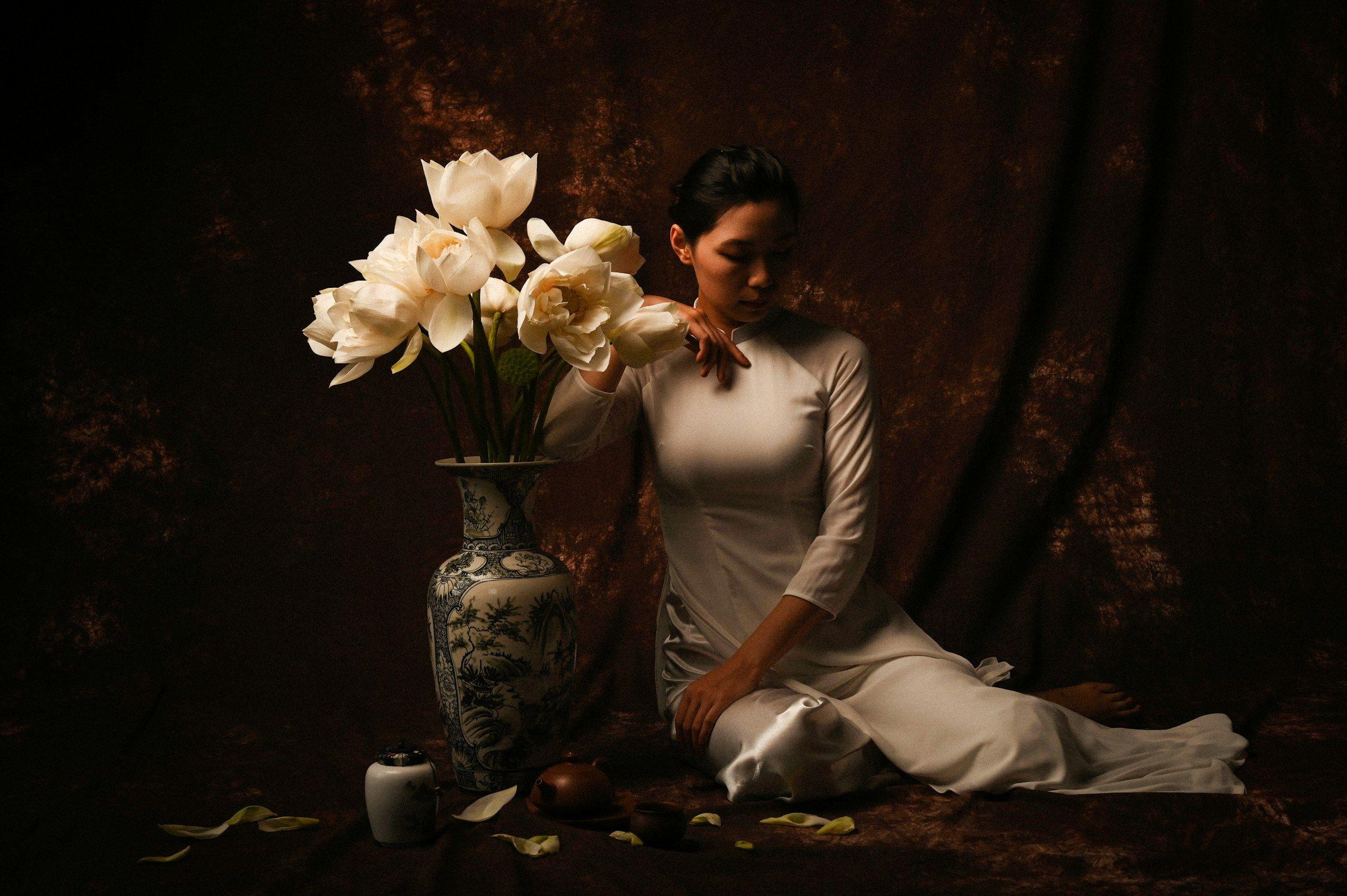
ESSENCE OF VIETNAMESE CULTURE
At the heart of Vietnamese culture is the sense of family (dòng họ), the lineage, and the village (làng). Since the period of Hung kings, this has been the heart of daily life and influences people's lifestyles, values, and manners of interaction. Even nowadays, when the country is more urbanized and modernized, it still lies at the web of social ties and traditions.
By maintaining a series of festivals, this spirit is kept alive. Various festivals revolving around villages, families, ancestor worship happen all year around, remind people where they come from and connect them with each other, the wider community, and the nation as a whole. The forms and styles of such festivals change over time but the meaning and essence still linger.
There are many layers of values in Vietnamese culture. At a national level, some values are shared by everyone: resilience, respect, community. Those are built and sustained at a village level and highlighted as national traits at a governance level. Some other values are more regional, specific, formed by regions, ethnicities, gender, professions. Different areas of Vietnam - North, South, the highlands, the lowlands, the Kinh, ethnic minorities, each has their own symbols and traditions that altogether enrich the overall culture.
Aside from traditions, some myths and hero stories shape the spirit of the nation. The Hùng Kings, Thánh Gióng, Sơn Tinh, and others are figures of legends and are symbols of unity, strength, and morality. These popular heroic narratives shape a sense of identity and instill inspiration for the Vietnamese, connecting them to their cultural roots.
MAIN VALUES IN VIETNAMESE CULTURE
Core Traditional Values
There are core traditional values that are long standing in Vietnamese culture. There is a sense of respect for family units and ancestry spirit. Idioms and folk poems remind people of where they come from, such as uống nước nhớ nguồn (“when drinking water, remember its source”).
The love for one’s nation starts with a sense of attachment to one’s village. Ever since the time of resistance against aggressive powers, villages, with their own way of organizing, have instilled the spirit of self-reliance and resilience in the face of difficulties. Naturally, these values extend into đại đoàn kết dân tộc, an overarching spirit at a national level that ties families, villages, and the whole country.
National / Universal Values
At a national level, patriotism (yêu nước) is the most fundamental value. This value is made stronger by other values, such as resilience, self-reliance, and heroism spirit along the course of history. There is a close link between individuals, families, villages, and the nation.
Other values show the humane side of the culture: kindness, compassion, tolerance towards others. There is a sense of gratitude and morality that help guide relationships. Meanwhile, creativity and diligence energize daily work and life.
There is a balance between simplicity and optimism. The sense of scholarship and appreciation for beauty shapes Vietnamese culture and life. As the society becomes more modern, other values emerge - a sense of equality, fairness, stronger recognition for individualism, and the chase of personal success. Balancing the traditions and the modern elements remains a challenge.
Gender/ Social Group Values
Gender and social group values in Vietnam contain many contradictory elements. Vietnamese women are described by qualities such as: confidence, self-respect, kindness, diligence, care. As social contexts change, from feudal time to village life to modern life, women manage to find a way to adapt complex roles in education, careers, community leadership. At the same time, as society is more urbanized and modernized, women face tensions between family expectations and personal aspirations - the pressure to marry, give birth, take care of people in the family, take care of domestic matters - become matters that must be carefully negotiated.
Men are upheld with other kinds of values, and other kinds of challenges. Rooted from values of Confucianism, men are encouraged to embrace strength, responsibility, authority, to be breadwinners, decision makers. As Vietnam becomes more modernized, men are under pressure to adapt: to take part in childcare, support partners’ careers, while still maintaining old values. The changing dynamics and at times conflicting values, in combination with the high speed of life in urban centers sometimes generate gender conflicts.
Some cultural practices such as Đạo Mẫu tradition, with its own rituals such as lên đồng (spirit possession) elevate and celebrate feminine strength, maternal power, and giving women symbolic spaces of agency and recognition. Altogether, these values, rituals, conflicts show the various ways that women and men in changing Vietnam navigate the complexities of a country with deep, long tradition yet at the same time is rapidly changing.
Regional Values
The values of Vietnamese regions have been shaped by history and geography, and the way people adapt to the environment.
In the North, the Red River Delta, people have been doing wet rice farming for generations in terrains that are susceptible to food, a practice requiring collective labor, strict organization. This fosters a sense of discipline, hierarchy, and communal responsibility. In the northwest mountains, the lands are more limited, the terrain more rugged. As a result, groups like H’mong had to shift cultivation, even do rock-farming. Altogether, this cultivates a sense of resilience, independence, and ecological knowledge.
By contrast, in the fertile Mekong Delta of the Southwest, there are many rivers and annual floods, which foster mobility, openness, generosity, and these values are strengthened by a long history of migration and frontier settlement.
In Hanoi, the political and cultural capital, there is a tradition for learning, integrity, and refinement that has been built through centuries of governance and scholarship. These patterns show how geography and history influence Vietnam’s unique regional characteristics.
Ethnic Minority Values
Ethnic minorities preserve their sense of identity via various festivals, rituals, and cultural symbols. For example, Tày people have Then ritual, Mường people have Mo tradition. The Central highlands have buffalo sacrifice, Chăm people have Ka-tê festival. These are expressed in the way they form and perform their music, costume, altars, ritual texts, food, and performance arts. Altogether, they form diverse, vibrant collages of traditions that enrich the country’s cultural life.
HISTORY (THE PROCESS OF ASSIMILATION - ABSORPTION - DISCARD)
Over the course of history, Vietnam has gone through many phases and periods where the culture interacts with other cultures. At times, this is in the form of assimilation and resistance. At other times, this is in the form of distillation and discard.
The processes of Assimilation and Resistance
During Chinese Rule (179 BCE – 1858):
During the Chinese Rule, Vietnam got the influence of Confucianism, which is a set of political and social philosophy. During this period, the country also absorbs ironworking, weaving, printing, and papermaking. Vietnamese learned Chinese script but also modified their own language, named chữ Nôm, and developed a system of vocabulary named Sino-Vietnamese. A branch of Buddhism also flows into the country, with its own forms and rituals. Meanwhile, the villages, with their own rules and structures, were maintained as cultural fortresses that resist the assimilation of Han culture.
During French Colonialism (1858 – 1945):
During French colonialism, the Vietnamese adopted quốc ngữ, a Latin-based script. This started as a colonial tool to control but afterwards was used by the Vietnamese in their Independence movement. The University of Fine Arts, originally the Indochina School of Fine Arts, was a form of Vietnamese-French collaboration, fostered new forms such as modern art and lacquer painting. Some art movements, such as the New Poetry (Thơ Mới) movement, instilled a sense of romanticism and individual expression. There were both attempts to resist French culture and integrate parts of it, and that process of pull-push struggle was a source of creativity.
Modernization (1945 – present):
1945 – 1986: During this time, Vietnam needed to be more strategic to integrate its culture to its revolutionary movements. Culture was assessed and more systematically defined. Hồ Chí Minh, as the leader of the movement, reflects the combination of East and West - when the country can maintain community spirit, simplicity, and compassion, while also absorbing Western rationality and Marxism. In terms of political philosophy, Northern Vietnam was influenced by socialist models from the Soviet Union and China; meanwhile, the South assimilates more Western culture.
1986 – present (Đổi mới era): This is a period of economic reform, when Vietnam has embraced technology, knowledge, industry, and global communication, while national culture is promoted. Some traditions, both good and bad, fade away, others integrated into the modern currents.
Looking back & Moving forward
Overall, Vietnamese culture can sustain and grow by balancing resilience and openness. It has a way to creatively absorb foreign influences, reject what is harmful to its essence, and consistently modify to adapt to new realities. This synthesis allows Vietnam to preserve its roots of patriotism, community cohesion and reverence to some core values, and at the same time engage with the wider world. However, as globalization and global geopolitics become more risky and unpredictable, there are various challenges ahead on how Vietnam can preserve its identity while still adapting to a more complex world.
Written by
Manager
Share this post